Most city builder games don’t fail because of traffic jams or pollution—they fail because they misunderstand what players want: control, consequence, and creativity. A great city builder doesn’t just let you place roads and buildings; it makes every decision matter. The best ones simulate cause and effect so realistically that a misplaced industrial zone can trigger a cascade of unemployment, crime, and citizen complaints. These games are equal parts puzzle, sandbox, and long-term strategy—where patience, foresight, and adaptability define success.
Yet, the market is flooded with titles that prioritize aesthetics over depth or offer shallow mechanics wrapped in polished visuals. True city builder strategy games reward systemic thinking. They challenge players to balance budgets, manage infrastructure, react to disasters, and evolve cities across decades or even centuries. Below, we cut through the noise to spotlight the most compelling city builder strategy games that deliver depth, realism, and lasting engagement.
What Defines a Real City Builder Strategy Game?
A genuine city builder strategy game goes beyond dragging and dropping zones. It integrates layered systems—economics, transportation, public services, environmental factors, and political feedback—into a cohesive simulation. Players aren’t just building pretty skylines; they’re solving dynamic problems.
Key characteristics include:
- Resource management: Water, electricity, waste, and raw materials must be sourced and distributed.
- Zoning logic: Residential, commercial, and industrial areas interact based on demand, pollution, and accessibility.
- Traffic simulation: Vehicles and pedestrians move based on real pathfinding, not invisible routing.
- Long-term progression: Cities grow across time periods, adapting to technological and social changes.
- Disaster and crisis response: Random or triggered events test resilience and planning.
Games that lack these elements often devolve into passive watching rather than active decision-making. The difference between SimCity (2013) and Cities: Skylines isn’t just scale—it’s whether the game respects your strategy.
Cities: Skylines – The Modern Benchmark
Launched in 2015, Cities: Skylines redefined the genre after the disappointment of SimCity’s always-online requirement and small map sizes. Developed by Colossal Order, it delivers a robust traffic AI, extensive mod support, and deep simulation mechanics.
Why it stands out: - Massive buildable areas: Unlike older city builders, you can expand across dozens of map tiles. - Traffic AI with personality: Cars take realistic routes, get stuck in jams, and reroute—making road hierarchy critical. - Mod-friendly: Steam Workshop integration allows custom assets, gameplay overhauls, and visual improvements. - Policy granular control: District-specific policies let you fine-tune education, industry, or leisure in localized zones.
A common mistake new players make is ignoring road hierarchy. Building too many wide roads early drains budgets, while overusing two-lane streets leads to gridlock. Instead, the game rewards phased development: start with arterials, add collectors, and later introduce highways.

With the release of Cities: Skylines II (2023), the sequel promised deeper agent-based simulation—each citizen, vehicle, and resource tracked individually. While ambitious, performance issues and missing features at launch held it back. The original remains the more stable, content-rich choice for now.
Surviving the Apocalypse: Fallout Shelter and Beyond
Not all city builders focus on utopias. Some thrive in chaos. Fallout Shelter, Bethesda’s free-to-play mobile title, flips the script: you’re managing a post-nuclear vault, not a bustling metropolis.
Here, the strategy shifts from growth to survival: - Resource scarcity: Power, water, and food must be generated inside confined spaces. - Dweller management: Assign residents by SPECIAL stats (Strength, Perception, etc.) to maximize efficiency. - Random events: Radroach infestations, fires, and raider attacks force tactical responses.
While simpler than PC counterparts, Fallout Shelter introduces core strategy concepts—queue management, risk mitigation, and upgrade prioritization—in an accessible format. It’s a gateway city builder, ideal for mobile gamers, but lacks the depth for long-term engagement.
Other post-apocalyptic entries like They Are Billions add real-time strategy elements, where base-building competes with zombie horde survival. These hybrids appeal to players who want tension with their urban planning.
Historical City Builders: Powering Empires from the Ground Up
For players drawn to realism and historical context, titles like Anno 1800 and Pharaoh+ offer richly detailed simulations rooted in real-world development.
Anno 1800 – Industrialization as
Gameplay
Set in the 19th century, Anno 1800 blends city building with economic empire management. You don’t just build a city—you manage intercontinental supply chains, satisfying the needs of multiple social classes.
Key mechanics: - Production chains: Workers need goods to produce better items, creating dependency loops (e.g., flour → bread → fed citizens → factory workers). - Diplomacy and espionage: Compete with AI opponents through trade, sabotage, or warfare. - Architect mode: Manually design factories and housing for efficiency and aesthetics.
The learning curve is steep. New players often overproduce early goods while neglecting research or defense. Success comes from balancing expansion with sustainability—much like real industrial-era cities.
Pharaoh+ – Ancient Urbanism Rebuilt
The Pharaoh+ remaster brings Impressions Games’ 1999 classic into the modern era. Tasked with building cities in ancient Egypt, you manage everything from granaries to temples, all while appeasing gods and preparing for Nile floods.
Its brilliance lies in layered dependency systems: - Farmers need tools from workshops. - Workshops need wood and flax from distant provinces. - Officials require housing and access to entertainment.
Mistakes are punishing. A single drought can collapse food supply if you haven’t built enough storage yards. But when your city thrives—pyramids rising amid bustling markets—it feels earned.
Top 5 City Builder Strategy Games
You Should Play
| Game | Platform | Key Strength | Best For |
|---|---|---|---|
| Cities: Skylines | PC, Consoles | Traffic simulation, mod support | Deep urban planning |
| Anno 1800 | PC | Production chains, empire scale | Industrial-era strategy |
| Pharaoh+ | PC | Historical accuracy, challenge | Classic-style gameplay |
| Surviving the Aftermath | PC, Consoles | Post-apocalyptic survival | Crisis management |
| Tropico 6 | PC, Consoles | Satirical politics, island management | Narrative-driven play |
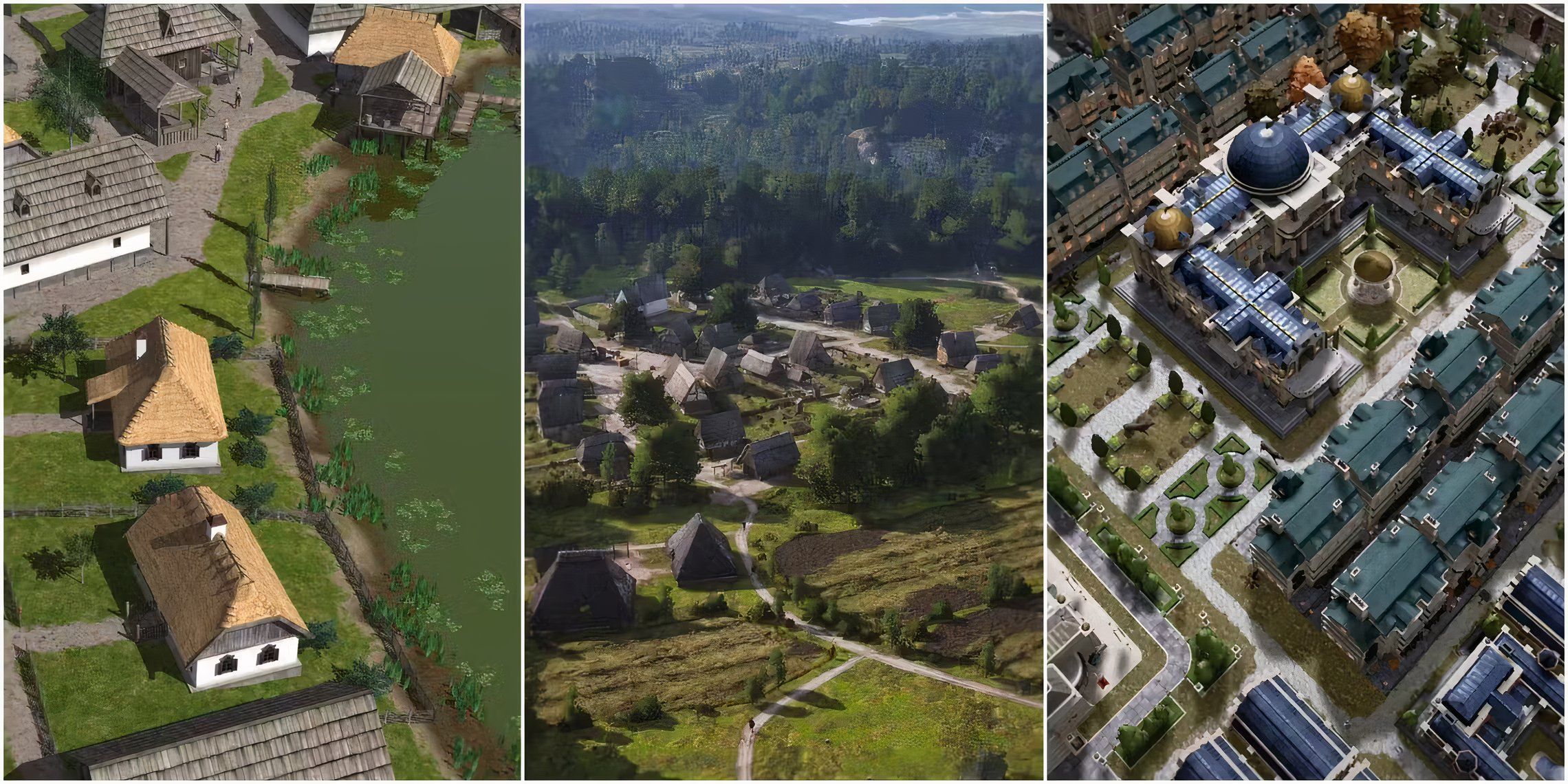
Each offers a distinct flavor: - Tropico 6 lets you rule a Caribbean island dictatorship, balancing foreign relations, citizen happiness, and banana exports. - Surviving the Aftermath focuses on colony survival after global collapse, with procedural events and resource scarcity. - Foundation emphasizes organic city growth—no grids allowed—forcing players to build medieval towns that evolve naturally.
Designing for Failure: Learning from Common Mistakes
Even experienced players stumble in city builders. Here are recurring pitfalls and how to avoid them:
1. Over-zoning early New cities often suffer from oversupply. Commercial zones without enough residents lead to vacant buildings. Tip: Let residential demand catch up before expanding services.
2. Ignoring public transit Cars clog roads fast. In Cities: Skylines, buses, metros, and bike lanes reduce congestion. Use the traffic overlay to spot bottlenecks.
3. Misplacing utilities Putting water pumps downstream from sewage outlets poisons your city. Always check wind direction for polluting industries.
4. Chasing milestones Meeting population targets shouldn’t override stability. Growing too fast strains budgets and services. Build incrementally.
5. Neglecting disaster prep Fires, storms, and disease spread quickly. Place hospitals, fire stations, and shelters early—even if they’re underused at first.
A pro tip: Save before major projects. Test road layouts or new policies in sandbox mode if available. Adjust based on feedback, not assumptions.
The Future of City Building: Simulation Meets Sustainability
Modern city builders increasingly reflect real-world urban challenges. Climate change, renewable energy, and social equity are no longer side notes—they’re core mechanics.
Cities: Skylines II, despite its rocky start, introduced dynamic weather and CO₂ emissions that impact global temperature and sea levels. Build too many coal plants, and your coastal districts flood. Invest in wind and solar, and reduce long-term risk.
Games like Eco take this further, requiring players to collaborate globally to prevent ecological collapse—all while building a functioning society. It’s not just city building; it’s civilization management.
These mechanics don’t just entertain—they educate. Players learn how urban sprawl increases emissions, or how green spaces improve mental health. The best city builders blur the line between game and thought experiment.
Build Smart, Not Big
The most satisfying city builder victories aren’t measured in population size or skyline beauty—they come from solving the unsolvable. Redirecting a traffic nightmare with one well-placed roundabout. Saving a failing district with targeted policy. Watching a self-sustaining ecosystem finally click into place.
Choose games that challenge your thinking, not just your mouse speed. Prioritize depth over dazzle. And remember: every road, zone, and policy is a decision with ripple effects. That’s the heart of true city builder strategy.
Start small. Plan ahead. Let your city evolve—not explode.